
Indian kabaddi player Brijendra Singh Choudhary has been stripped of his silver medal from the Asian Beach Games after failing an in-competition dope test. He tested positive for the prohibited diuretic brinzolamide and has accepted the sanction, leading to the disqualification of his results.
Indian kabaddi player Brijendra Singh Choudhary has been stripped of his silver medal from the Asian Beach Games after testing positive for a prohibited diuretic. The International Testing Agency (ITA) confirmed the anti-doping rule violation, which Choudhary has accepted.
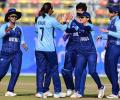
The state-run Pakistan Sports Board is only funding a fraction of the country's 248-member Asian Games contingent, with many athletes and officials relying on federations, the POA, or self-financing. The Pakistan Olympic Association secretary, Khalid Mahmood, confirmed that self-funded medal winners would be compensated and highlighted Pakistan's medal hopes across various disciplines.

The Asian Games, a major multi-sport event, has a long history of controversies extending beyond the sporting arena. From diplomatic disputes and selection rows to doping scandals and disputed decisions, these incidents have often highlighted the intersection of politics, national interests, and sports.

The Sports Ministry has approved a 492-member Indian contingent, comprising 265 male and 227 female athletes, for the upcoming Asian Games in Aichi-Nagoya, Japan. Athletics forms the largest group with 73 participants, including star athletes like Neeraj Chopra and Jyothi Yarraji. Other prominent sports like shooting, weightlifting, badminton, boxing, and wrestling also feature strong teams, with some adjustments made due to doping violations.

If India's medal tally ultimately falls significantly short of Hangzhou, the conversation should not stop with the athletes or coaches. It should extend to a much more uncomfortable institutional question: After years of increased investment, programmes, infrastructure and policy attention, where exactly is the system failing to convert that investment into medals, champions and depth across sports? asks Jaydeep Ray.

Gagandeep Singh was among a slew of athletes across sports who were handed three-year ban by the National Anti-Doping Agency
India has suspended 13 Kabaddi players for doping and ordered more tests on others, just days ahead of a tournament being dubbed the World Kabaddi Cup.

The World Kabaddi League, on Tuesday, announced the list of 23 players who committed anti-doping rule violations, either before the draft or during and also in out of competition tests. Eleven players were found to have violated anti-doping regulations in the time since the start of the inaugural Wave WKL, according to the organisers.
Nine more kabaddi players were caught, on Thursday, for using banned steroids, taking the total number of dope flunked players who were tested early this month during the selection trials of the World Cup to 19.

Patel emphasised that one of the most important features of the bill is the establishment of a dedicated tribunal for resolving disputes, reducing the burden on the judiciary and ensuring quicker justice.
The organizing committee of second World Cup Kabaddi on Sunday temporarily suspended four players who were tested positive for banned drugs by National Anti Doping Agency laboratory.
The teams of National Anti Doping Agency (NADA) collected samples of 81 players of all the teams who are taking part in the ongoing third World Cup Kabaddi.
Hosts India outclassed Canada 59-25 in the final to lift the men's Kabaddi World Cup at the Guru Nanak Stadium in Ludhiana, on Sunday.

The period of suspension begins from July 20, 2017, the date of her provisional suspension, according to an order of the anti-doping disciplinary panel (ADDP) of the NADA dated March 29.

A summary of sports events and persons who made news on Monday
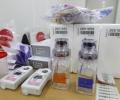
India may be considered a sporting minnow but in terms of doping by its athletes, it has been ranked third behind Russia and Turkey in a World Anti-Doping Agency Report for 2013 with as many as 91 from the country testing positive for banned substances in that year.

In what may come as an embarrassing revelation for India's anti-doping machinery, 500 sportspersons, mostly weightlifters and track-and-field athletes, have failed drug tests conducted by NADA in the last four and a half years.

The National Anti-Doping Agency (NADA) has banned hockey goalkeeper Akash Chitke for two years after he tested positive for a prohibited substance earlier this year.

Indian sports had a lot to celebrate despite a decrease in the medal count at the 2014 Asian Games in Incheon.
